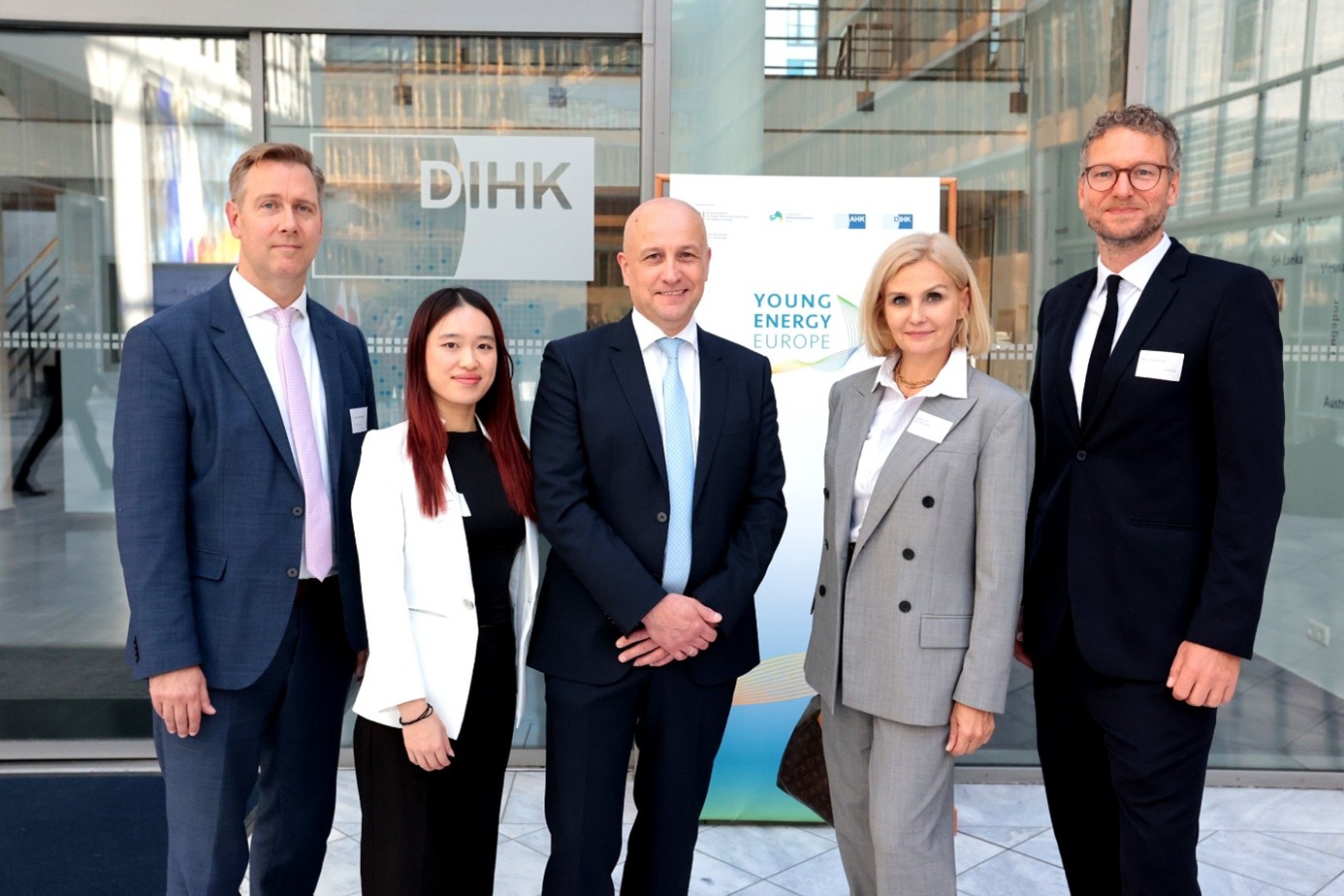
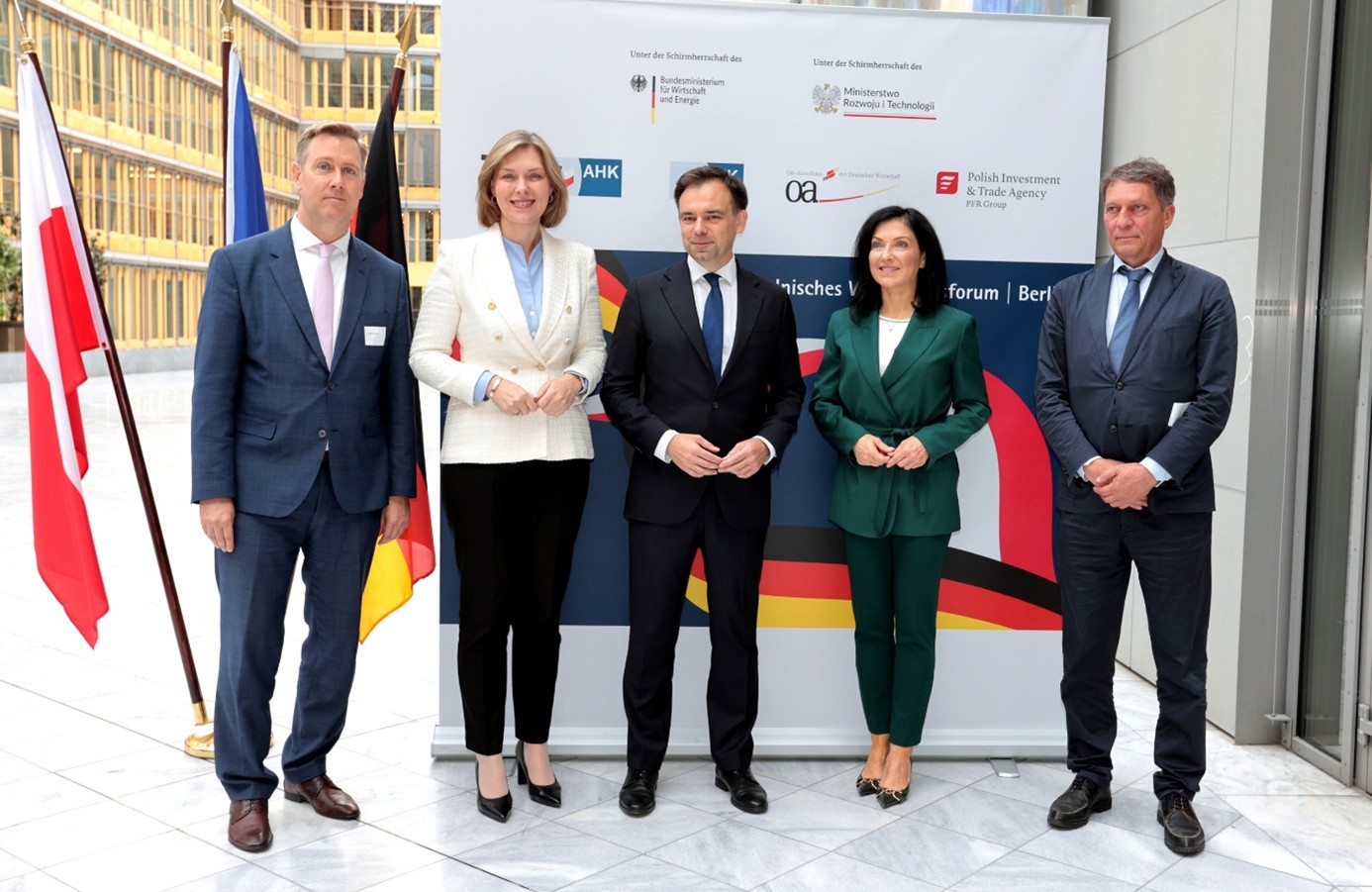
At the forum in Berlin, political and business representatives discussed the future of German-Polish cooperation, emphasizing the importance of cooperation and joint projects for growth and innovation.
The German-Polish Economic Forum took place on 24 September 2025 at the “House of German Business” in Berlin. Opening speeches were delivered by DIHK Chief Executive Helena Melnikov and Philipp Haußmann, Deputy Chairman of the Eastern Committee of German Business. Following this, Katherina Reiche, the German Federal Minister for Economic Affairs and Energy, and Andrzej Domański, the Polish Minister of Finance and Economy, joined leading representatives of German and Polish companies to discuss current challenges and opportunities in bilateral economic relations. Numerous participants, with backgrounds in politics and business, from both countries used the forum to highlight the importance of German-Polish cooperation and provide new impetus for future development.
Germany and Poland already have a strong economic partnership. Poland is Germany’s fourth-largest trading partner, with a record trade volume of €172 billion in 2024. Poland is expected to see GDP growth of around 3.2 percent in 2025. The ministers emphasized that deeper industrial cooperation, closer regional collaboration and a joint commitment to a strong European Union are key to success.
This excellent cooperation is also evident at project level: three of the eight company representatives and speakers at the event have already qualified Energy Scouts within their companies, demonstrating the intensive exchange between German and Polish businesses. The Young Energy Europe project promotes young professionals and facilitates the cross-border transfer of energy efficiency expertise.
The discussions focused on how to strengthen Europe’s competitiveness and the importance of innovative partnerships. Minister Reiche underlined that Germany’s economic vulnerability has an impact on the entire continent, and that a robust German-Polish partnership is essential for fostering a competitive Europe. Minister Domański stressed that Europe’s competitiveness could only be bolstered through collaborative efforts, commending Poland’s commitment to reform.
The 2025 German-Polish Economic Forum demonstrated the importance of innovative partnerships and company collaboration for the future viability of the European economy. The momentum generated by the event will drive new initiatives and closer cooperation at all levels.
One example of a collaboration that has been successfully developed is the Young Energy Europe project. Since 2021, the project has promoted operational energy efficiency in Poland, reducing energy costs and environmental impact. To date, 184 young professionals from 50 companies have undergone training as Energy Scouts. A total of 27 GWh of electricity and nearly 25,000 tons of CO₂ have been saved annually since 2021. The outlook is also encouraging: currently, 77 young employees from Polish companies are undergoing further training to become Energy Scouts. This qualification programme is offered by the Foreign Bilateral Chambers of Commerce Abroad (AHKs) in Poland and a total of nine other Central and Eastern European countries.
Details about the German-Polish Economic Forum 2025 can be found here.