Lukavac Cement d.o.o. is engaged in the production and sales of Portland and masonry cement. The company was founded in 1974 in the small city of Lukavac as the first cement factory in Bosnia and Herzegovina. Through continuous investment in modern technology and a dedicated workforce of 217 people, Lukavac Cement today plays an important role on the domestic and regional cement market.
Process description and Project Idea Overview
Cement production essentially involves four steps: crushing and grinding raw materials such as limestone and clay. The mixture is then heated to around 1,450 °C in a rotary kiln to form cement clinker. After cooling, the clinker is ground with small amounts of gypsum to form fine cement powder, which is then stored, packaged and shipped.
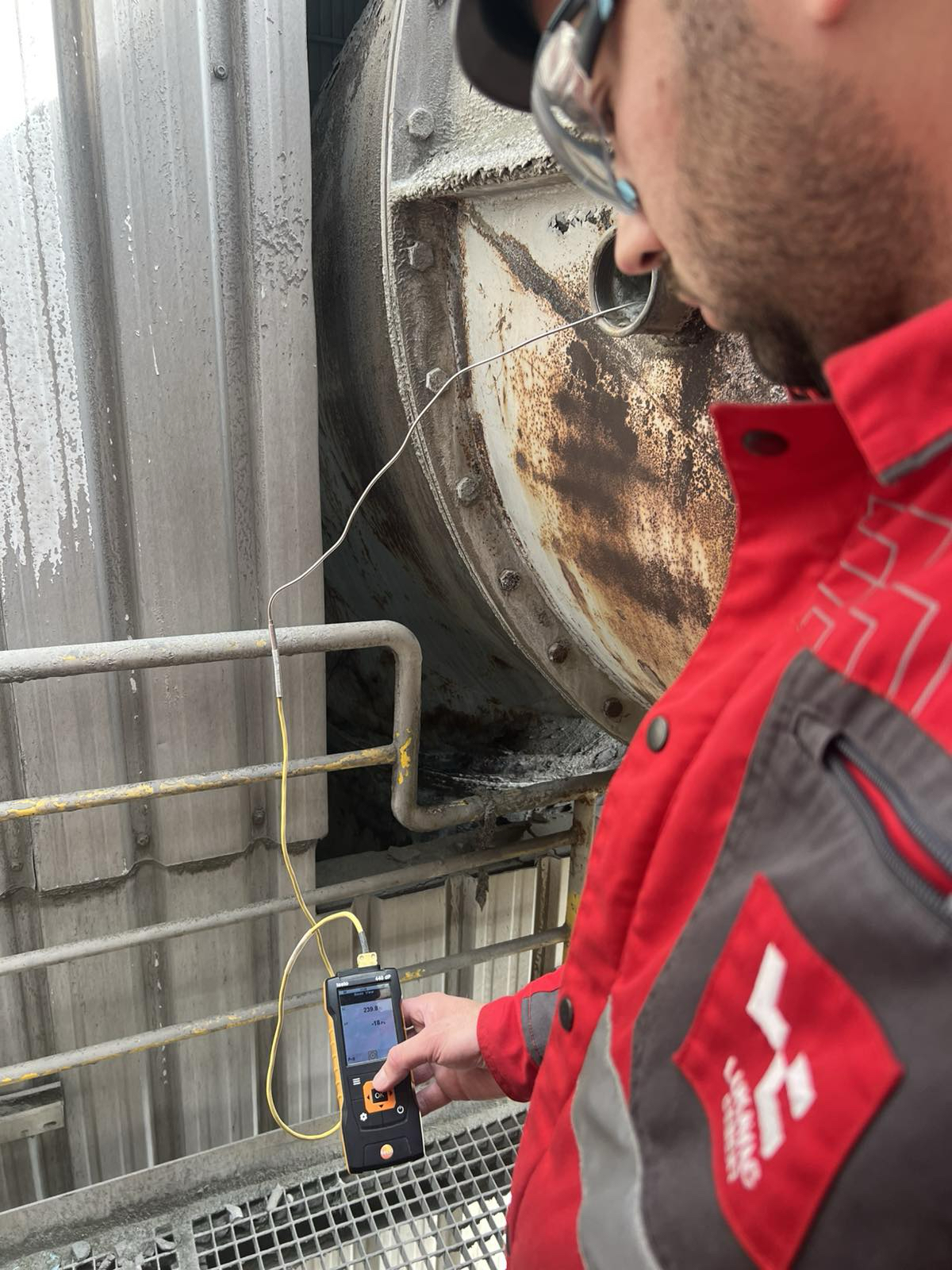
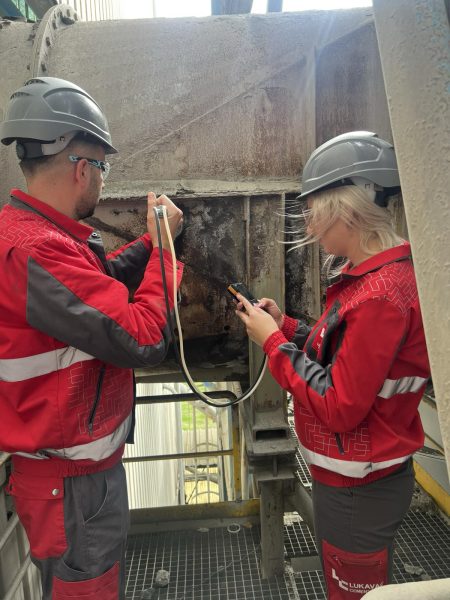
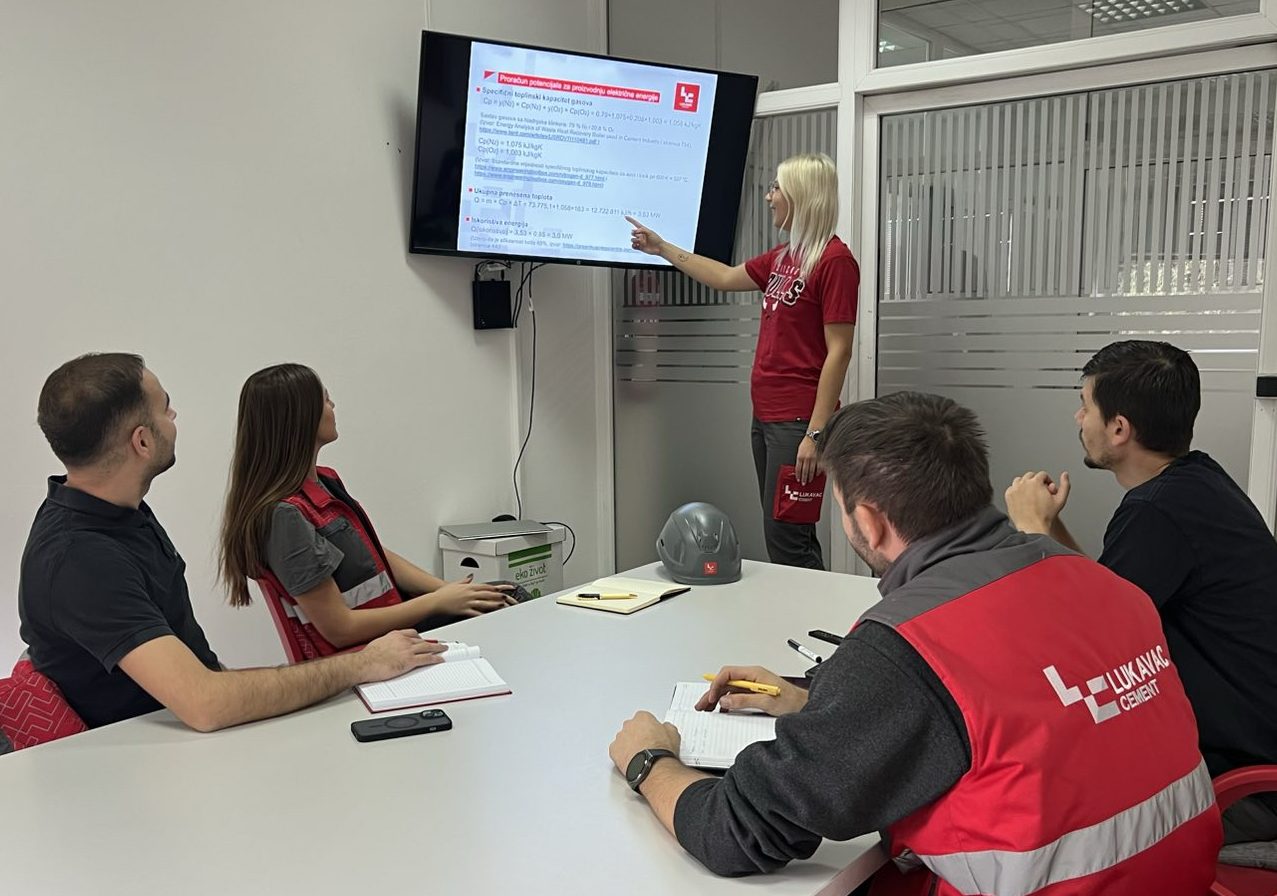
The practical project of the Energy Scouts Žunić Emina, Bajrić Melisa, Salibegović Nermin, Muminović Jasmin and Salihbašić Mahir focuses on the cooling process and the idea to reuse the heat energy for other purposes.
The clinker must be quickly cooled from a temperature of about 1,450 °C to a temperature of about 100 °C. Cooling is done in a clinker cooler, in such way that atmospheric air is blown into the cooler chambers using 5 fans, with the total flow of this air being 133,000 Nm3/h. During clinker cooling, air is heated, and more than 50% is used for other heat needs in the process, namely the the combustion process of the rotary kiln and precalciner. But the currently not used, and therefore called “waste flow” of 57,190 Nm3/h leaves the clinker cooler and still has around 300 °C. The idea is to use this waste air with the goal of producing electricity and providing it in other processes of the plant.
The Energy Scouts calculated the thermal potential of the waste gas flow and recognized a heat transfer potential of 3.53 MW and possible electricity production of 720 kW per hour. Electricity generation would be based on the principle that hot air at 323 °C is directed towards the AQC (after quenching chamber) boiler. This system is proven technology and has been implemented in many cement plants throughout the world. The steam produced in the boiler would then be directed towards a steam turbine connected to an electric generator where electricity would be produced. The steam is returned as low-pressure condensate and directed to an air-cooled condenser, where it is reused as feed water for the boiler, and the generated electricity is used directly within the factory.
Economic and Environmental Impact
By implementing the “waste heat to electricity” project, calculations show a potential of 4,244 MWh “produced” electricity per year. This would consequently lower the energy cost, the reliance on the power grid and at the same time reduce the CO2 emissions by 2,287 tons per year.
Project Status
For the purposes of implementing the project, a third-party company was hired to perform measurements and calculations on site with the aim of assessing the possibility and amount of electricity production. The implementation of the waste heat recovery system represents a cost-effective project considering benefits such as electricity savings, reduction of CO2 emissions and a short investment payback period.
Heat Recovery
- Industry Sector: Cement industry
- Energy Source: Coal, SRF/RDF (Substitute fuels from waste), Electrical energy
- Energy savings potential: 4,244.4 MWh/year
- CO2 savings potential: 2,287.7 t CO2/year
- Potential cost reduction: 424,400 € /year
- Investment costs: 2,500,000 €
- Payback period: 6 years
- Company:
Lukavac Cement d.o.o.
Lukavačkih brigada
75300 Lukavac
Bosnia and Herzegovin
https://www.lukavaccement.ba/